
How Does Air Conditioning Work? Understanding Your AC System
Air conditioning is something most of us rely on without giving it much thought—until it stops working. But have you ever wondered how does air conditioning work? For homeowners looking to maintain a system or landlords trying to troubleshoot issues for tenants, understanding the basics of air conditioning systems can help you make decisions, save money, and stay cool all summer long.
Table of Contents
What Is an Air Conditioning Unit?
How an Air Conditioner Works
Key AC System Components
The Refrigeration Cycle: Moving Heat Outside
How the AC Works with Thermostats and Fans
Types of AC Systems
Benefits of a Home Air Conditioning System
Why AC Maintenance Matters
Take Charge of Your Air Conditioning
What Is an Air Conditioning Unit?
An air conditioning unit is a system designed to remove heat from the air inside your home and transfer it outside, leaving your indoor environment cooler and more comfortable. Air conditioners do more than just cool the air. They also dehumidify and filter your indoor air, contributing to a healthier and more pleasant space.
Contrary to what some might think, AC units don’t add cold air—they remove heat. This process is part of the refrigeration cycle, a principle used in refrigerators, freezers, and commercial cooling systems.
How an Air Conditioner Works
How does an air conditioner work? Here’s the basic idea: your AC system pulls warm air from your home, cools it using a refrigerant, and then pushes the cooled air back in while expelling the heat outside.
In more technical terms:
The warm air passes over an evaporator coil filled with refrigerant.
The refrigerant absorbs the heat and evaporates.
The gas refrigerant then travels to the compressor and condenser coil outside.
The heat is released into the outdoor air, and the refrigerant is converted back into liquid.
This cycle repeats until your desired indoor temperature is reached.
This process may seem simple, but it depends on several complex parts working in perfect harmony.
Key AC System Components
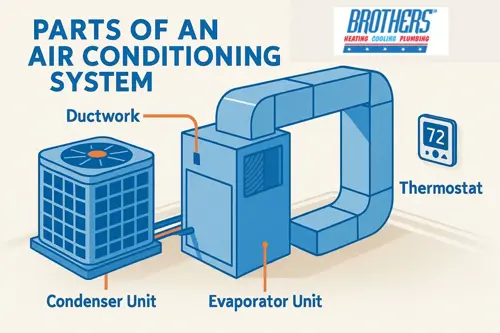
Understanding the components of the AC system is key to diagnosing common issues.
Here are the main parts:
Evaporator coil: Located inside your home, this absorbs heat from the indoor air.
Compressor: Pumps the refrigerant and pressurizes it to help it flow through the system.
Condenser coil: Found in the outside unit, this releases the heat absorbed from inside.
Refrigerant: The chemical that goes through the system, changing states from liquid to gas and back again.
Blower fan: Moves air over the evaporator coil and into your home.
Thermostat: Communicates with your AC to tell it when to turn on or off based on the set temperature.
If any of these parts isn’t working properly, your system won’t cool efficiently. That’s why prompt repairs and routine maintenance are crucial. If you live in North Carolina or South Carolina and need help, call Brothers Air, Heat & Plumbing at 704-620-6252 or schedule a service online.
The Refrigeration Cycle: Moving Heat Outside
The refrigeration cycle is the magic behind the cooling process. It’s a closed loop that involves four main stages:
Evaporation: The refrigerant absorbs heat from indoor air and evaporates.
Compression: The compressor pressurizes the gas, raising its temperature.
Condensation: The hot, high-pressure gas releases heat outdoors and condenses back into a liquid.
Expansion: The liquid refrigerant passes through the expansion valve, reducing pressure and temperature before re-entering the evaporator.
The cycle continues over and over, maintaining your comfort. This process can remove as much as 5 to 20 gallons of water from indoor air per day, depending on your climate.
How the AC Works with Thermostats and Fans
Your air conditioner doesn’t work alone. It collaborates with your thermostat, ceiling fans, and air ducts to ensure consistent and efficient cooling.
Thermostat: Acts as the command center. When the temperature inside rises above the set point, the thermostat sends a signal to the AC to turn on.
Fans: Help circulate air, reduce hot spots, and allow for higher temperature settings without sacrificing comfort.
Ductwork: These metal or flexible pipes transport conditioned air from your AC unit to various rooms in your house. Leaky or dirty ducts can reduce efficiency by up to 30%.
A smart thermostat can also optimize energy use based on your daily patterns—another great option to consider when upgrading or installing a new AC system.
Types of AC Systems
If you’re building a new home or replacing an outdated AC system, it might feel overwhelming with all the choices available. Here are a few common types:
Central air conditioning: Uses ducts to distribute cooled air to the entire home. Ideal for larger homes and long-term use.
Ductless mini-splits: Great for homes without ducts or for zoning specific areas.
Window units: Compact, self-contained systems for small spaces.
Portable units: Flexible, movable systems that don’t require permanent installation.
Each type has its pros and cons. If you’re considering an upgrade, check out our new air conditioners to find the best fit for your needs.
Benefits of a Home Air Conditioning System
A well-functioning AC system offers more than comfort:
Improved air quality: Filters allergens, dust, and pollutants.
Humidity control: Reduces excess moisture, preventing mold and mildew.
Better sleep: A cool environment promotes deeper, more restful sleep.
Increased home value: A modern AC system is a major selling point.
Energy efficiency: Newer systems can cut energy use by 10–40%.
Why AC Maintenance Matters
Even the best AC system needs regular care. Without it, parts wear down, efficiency drops, and breakdowns become more frequent.
If you want to stay on top of maintenance but don’t have the time or the know-how, consider enrolling in a professional maintenance plan with your local pros. The Brothers Pro Service Plan is designed to take the guesswork out of HVAC upkeep and can save you time, money, and stress.
Members enjoy:
Seasonal tune-ups
Priority scheduling
Discounts on repairs
Longer equipment lifespan
Explore our maintenance options or schedule a visit today to keep your system running smoothly all year long.
Take Charge of Your Air Conditioning
Your AC system is a complex, hardworking appliance—and like any major home system, it needs routine care to stay efficient and reliable. Understanding how air conditioning works empowers you to keep your home cool, reduce energy costs, and spot issues early.
When you’re ready for the experts, trust the team at Brothers Air, Heat & Plumbing. Whether you need a quick AC repair, a seasonal tune-up, or a brand new system, we’ve got the tools, training, and experience to do the job right.